
Wednesday, February 05, 2014
Predicting the end of Facebook or Google...
A few days ago there was a post on Facebook on a research done at Princeton that predicted the decline of Facebook. It turns out that 7 years ago, together with Matti Kelttanen we modelled using My Space as basis, how Facebook would evolve. The conclusion is that the the model did not correlate in time but it helped to open a
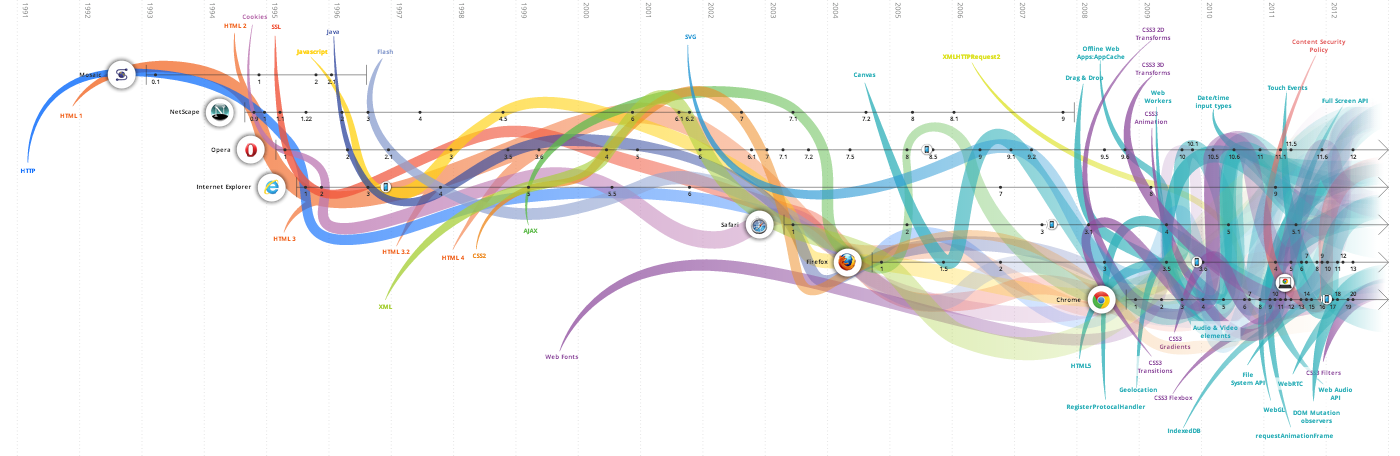
debate on the lifecycle of services like Facebook. On the Internet nothing is forever, ok, maybe Google :-) but even on search and browsers there have been many waves. Check out this beautiful representation of the evolution of the web done by Vizzualityhttp://www.vizzuality.com/.


Tuesday, January 28, 2014
Will Digital Public Healthcare Systems be up to consumer expectations?
A few days ago I went to the doctor to ask for a prescription for a drug that I need to take and that I am about to run out of. Instead of the doctor I saw a nurse that told me that the doctor would check the drugs I am using and if agreed that I need to continue taking them, he would issue a new prescription. Then she gave me a link to a site that the Finnish Social security system is using to provide Health information and communicate with the public. You access the site using the security codes of your bank. there I found the prescription in electronic format that is automatically accessible from any pharmacy. So no need to carry anymore physical prescriptions, and a secure way to access my private health data. However the system is far from perfect.
-The interface needs work, specially in prettifying it
-There is a lot to be done in extracting value for the user form the data that could be generated
-The communication and notification system can be improved
For over a decade now, Public healthcare in many developed nations has worked in fixing the back of the system. Building the Databases and infrastructure that will enable the new generation of services that we expect to see in the next years. With the imminent explosion of wearables and sensors, we are going to see huge increase on the amount of data collected about us. This will generate a lot of interesting businesses from storage in the cloud to new added value. However a key role will be the design of those services that take insights to the user.
Solutions like "How Are You" put an extra effort on the front end experience but also open their API to their parties. This is a remarkable initiative that public organisations particularly in those countries where they represent a monopoly should consider. They need to operate more like facilitators of an ecosystem, where the platform the data and the design are focused to provide the best possible value to the end user.
Design, again is not only about a beautiful front end experience but about building the components that give a better solution to the public. I really hope those responsible for the digital health systems see that the extra mile of investment on design makes the whole difference.


-The interface needs work, specially in prettifying it
-There is a lot to be done in extracting value for the user form the data that could be generated
-The communication and notification system can be improved
For over a decade now, Public healthcare in many developed nations has worked in fixing the back of the system. Building the Databases and infrastructure that will enable the new generation of services that we expect to see in the next years. With the imminent explosion of wearables and sensors, we are going to see huge increase on the amount of data collected about us. This will generate a lot of interesting businesses from storage in the cloud to new added value. However a key role will be the design of those services that take insights to the user.
Solutions like "How Are You" put an extra effort on the front end experience but also open their API to their parties. This is a remarkable initiative that public organisations particularly in those countries where they represent a monopoly should consider. They need to operate more like facilitators of an ecosystem, where the platform the data and the design are focused to provide the best possible value to the end user.
Design, again is not only about a beautiful front end experience but about building the components that give a better solution to the public. I really hope those responsible for the digital health systems see that the extra mile of investment on design makes the whole difference.
Sunday, March 08, 2009
Spotify is the first social music enabler
Spotify has changed the way music was played at parties introducing the best Collaborative DJ. See my post on how to organize a spotify party. Now you can get everything, and finding everything can be done through a discovery process. This process works great when is done in a collaborative way. Music is attached to memories, and when you hear songs you start connecting to other songs, through memories. Last weekend when we celebrated my friend's Jesper 40 b-day party we played this game with Spotify. The result was awesome. Not only because everyone had an amazing time, but because it opened the eyes to this human behavior. Spotify is an enabler, the very first enabler of Social Music. It is not yet untapped, and is just a matter of time that people, and companies realize of the potential.
Friday, February 13, 2009
One in four marriages in Helsinki involve at least one foreigner
http://www.hs.fi/english/article/-/1135243389162
De acuerdo con Helsinging Sanomat uno de cada cuatro matrimonios en Helsinki incluye por lo menos a un extranjero
De acuerdo con Helsinging Sanomat uno de cada cuatro matrimonios en Helsinki incluye por lo menos a un extranjero
Thursday, February 12, 2009
Latitude is the gateway to web 3.0
This week has been my baptism in the next phase of social networks and what we could call web 3.0. I am referring to the first real attempts to let people share their location. I have now tried latitude from Google, but I also have registered in trypit.com, dopplr.com, and finally http://MostTraveledPeople.com. Latitude is an interesting experiment. To me is like adding super powers, or acquiring a new sense that allows us to know who is nearby. It goes beyond our sight, smell or ears. My first experience has showed that most people I know are so curious that dont mind too much to share their location despite the fact that is dropping the level of privacy.
Saturday, January 31, 2009
People and Places mobile services and applications

This is a short list of the emerging start-ups that are focusing in the areas of contextual services for social networks.
Pocketlife
Bliin
Gypsii
Rummble
Tooio
Friday, January 23, 2009
NSN Industry seminar in Cairo January 2009

I had the pleasure of being invited by Ulla Koivuskosku to speak at the seminar this week in Cairo. The experience was great. The Egyptian telecommunications industry was well represented. And we had the chance to meet and talk to different people. Unlike the rest of the world the Egyptian economy like most of the middle east is still ok and growing. Tomi Ahonen did a great presentation on how with the current climate only the ones that adapt will succeed. He gave a list of examples of successful services in different categories.
My presentation revolved around the relevance of design in modern organizations and how companies need to embrace design management and design organizations into their own. I also gve a few examples of how service dsign can be the key to increase customer loyalty and presented a few examples of how different operators in different parts of the world plan to deal with the crisis this year. I finished with a list of thoughts collected after CES and from Fjord Research.
The audience was very interested about what is service design, and the methodology we apply, and user experience in general.
Sunday, January 18, 2009
The best of CES 2009

This year I visited CES and Las Vegas for the first time. Everyone said that CES was this year more quiet than ever. The truth is that I did not see anything disruptive but rather evolutions of existing trends. The key things I saw could be summarize in the following points:
-User Experience becoming a "buzz expression": You could hear people talking in multiple contexts about UX. It is clear that there is a new benchmark for new products and services and UX is a key parameter.
-OLED will make flat really thin. Samsung as the front runner. We can expect the next 3 years a race to showcase the thinnest screens, eventually ending in flexible screens in 5 to 7 years.
-3D TVs and projectors will be the next TV upgrade over the next 3 years. Content creators need to undersntand the need to move into this format really fast. At the moment is the main challenge. The user experience is superb.
-QWERTY moves from business to other consumer segments in mobile phones. Motorola, Balckberry and others showcased clam-shells, etc using QWERTY
-Convergence in the living room is finally shaping up. the main challenge is that there is not a consistent good UI for experiencing Internet-like content in the TV screen. Yahoo showcased widgets for TV, quite convincing. I also liked some prototypes from Toshiba to interact with gestures with content on Tv.
-Netbooks are mainstream: not much to say here. Every manufacturer has nowadays their version. My view is that only those that understand the posibility of making netbooks the next communicator will find customers among operators. This will require probably chosing Linux and building a dedicated UI and set of communication applications.
-Digital photo frames, are the next Christmas gadget. I bought the Kodak W820, with RSS capability. It is great what you can do. But the UX is broken and takes 2 days for a connoiseur to set it up.
-GPS is the next must have feature. From phones to cameras, Android and Sony where good examples. Worth reading the Wired issue of this month on this topic.
I missed the new Palm at the show. I saw it the they after I left. However I have a good selection of pictures that can be found at Flickr.
Monday, December 22, 2008
Fjord's new website

We finally have launched the long waited Fjord site. This time we did a complete redesign. The team has done a great job in my subjective opinion. The site has a good list of case studies, explains methodology and should have regular updates on trends, events etc.
FICOD
A few weeks ago I was invited by Red.es to participate in FICOD, the leading forum for digital content in Spain. I was in a panel with Nokia, Google, Telefonica, BBVA and ZED. The topic, "New devices and new content" went around our core competence, user experience. It is clear that UX has become one of the main priorities and focus for most companies in this business. It is now finally understood that good UX helps to generate interest, traction and sales. Good UX with cool design is the key to differentiate and generate pull from the consumers.
There are not that many companies that offer good UX, there are almost none that have mobile as the core, and just Fjord has a good track record in the design of convergence experiences.
There are not that many companies that offer good UX, there are almost none that have mobile as the core, and just Fjord has a good track record in the design of convergence experiences.
Wednesday, December 26, 2007


Sunday, September 02, 2007
Augmented reality application
This is the first implementation that I see of Augmented reality in retail. It was at the Imaginarium store in terminal four in Madrid. The idea is that you pick up a racket with the icon of the model you want to see from the toys catalogue and you can see it displayed in real time 3D in the screen.
Monday, October 02, 2006
Service Design Finland
Last Friday we attended the launch of the Service DEsign initiative here in Helsinki in the design week. Satama hosted the event. There were presentations from Live works, Satama/Nokia, and Forum Virium. There was a very nice moment when the founder of Live Works showed a screen of what they did in 2001 when they searched in google for service design and got zero results. It just happens that me and Xavier Blanc did exactly the same about the same time. We were in those days exploring the same ideas on how to export the design principles to the design of intangible services. We ended talking about architecture, since service design had different implications on those days. In the end it was the same. I think the guys at Live works have done an excellent work in generating awareness and building the tools, frameworks that gives flesh to what more and more clients should demand. We have come across them and Ideo iin the last months. It was interesting to see so many people around this topic. I guess there is at least interest. There is an academic side of the service design as Live works also mentioned. I studied with one ogf the gurus in the area, Professor Christian Gronroos from Hanken, the Swedish School of Economics in Helsinki. They have done this type of consulting work for a couple of decades. However what we do and what live works do is to sytematized and frame the problem solving process that takes place when designing a service for your client.
Aula 2006

I have been so busy all this time that I missed the chance to post on the Aula event (www.aula.cc). This year Aula asked us at Fjord to help organizing the event here in Helsinki. Andreea did an amazing work doing the project management of the event. The event itself was awesome. I got the chance to talk to Martin Varsavski from FON, among other. All the presentation on the second day were great, but I specially liked Saul Griffith's presentation on people making things and Adam Greenfield's presentation on the ethics of future UI design (with whom I had a very good chat on AR).
Saturday, September 30, 2006
The Finnish House fair

In Finland there is an interesting concept of trade show. The house fair. Every year a city gives away a whole piece of land to be built as a new neighbourhood. The construction companies go and build their showcases in this area, and then they sell the houses after the fair. The houses can be visited during the summer. they are fully furnished, and become a living ad for those companies that do the best possible product placement.
Sunday, September 24, 2006
Fjord's weekend in Devon

Also in June both offices went for a strategy an company weekend to Mike's farm in Devon. We had excellent hosts in Mike's family, weather, food and productive time. For the new people at Fjord I am sure it was almost shocking to see the range and quality of the projects we do across offices. We came out of Devon with a new strategy and plan for the next months, specially our website, which will be launched soon.
Picnic at Tervasaari

Last June we organized a small picninc at island of Tervasaari, wich is a few hundred meter in front of our office in Helsinki. Tanje took care of the catering.
Friday, August 11, 2006
New Article from Mark
Mark Curtis, member of Fjord's board has written an article in Vodafone's online magazine Register. He explains how we are becoming distributed beings thanks to mobile technology.
Monday, June 05, 2006
Mobile user interfaces – its time for a new paradigm
Olof and Mike from our UK office just published an article in the 3G portal on the need for a new paradigm on the design of mobile user interfaces
Subscribe to:
Posts (Atom)